Fruit Fly Repellent: What Keeps Them Off the Bar
Quick Answer: None of the university extension pages cited here recommends a scent repellent for fruit flies. What they describe keeping flies off a kitchen or bar is removing the food source, covering food, screening windows and doors, and airflow such as positive air pressure and air curtains. A 2016 University of Guelph lab study found some plant oils repelled spotted wing drosophila, a fruit pest, which is not evidence for a bar.
Searches for a fruit fly repellent expect a spray, a plant or a smell that makes flies stay away. The sources are more about closing the door than about a scent. This post separates what the research shows from what it does not, and lists the steps that do keep flies off a bar. Nothing here replaces finding the source, which is in our guide to getting rid of fruit flies in a bar.
Does fruit fly repellent work?
No source cited here shows that a repellent keeps fruit flies off a bar. University of Maryland Extension (checked September 2026) calls sanitation the primary control and does not mention repellents. The same page says adult fruit flies are attracted to overripe fruit, fermenting food, wine, beer, juice and vinegar, so a bar is full of what draws them. A scent has to outcompete that, and none of the extension pages say one does.
Are natural repellents like essential oils proven?
Not for a bar. A 2016 University of Guelph study in Scientific Reports (checked October 2026) screened twelve plant essential oils in the laboratory against spotted wing drosophila, an invasive pest of soft-skinned fruit. Most oils deterred flies from cotton wicks holding attractive raspberry juice. Peppermint oil was particularly effective, and stayed fully repellent for 6 days after application in the lab. That is a different species from the fruit fly in most bars, and a cotton wick in a lab is not a back bar. It suggests the idea is worth testing. It does not show a bar can rely on it. Keep any oil or scent product away from open bottles, garnish, ice and glassware, and read its label.
What keeps fruit flies off a bar?
Barriers and food control do the work in every source.
| Measure | What the source says | Source |
|---|---|---|
| Cover food | Cover prepared food as quickly as possible. Store edibles in airtight containers or refrigerated. Bag ripening fruit. | University of Arizona and Oregon State |
| Screens and seals | Screen windows that open with 18 by 18 mesh. Keep doors closed and use weatherstripping and door sweeps. | University of Arizona and Oregon State |
| Airflow | Maintain positive air pressure in kitchens. Install air or strip curtains over exterior entrances to kitchen areas. | Texas A&M AgriLife |
| Outdoor trash | Place exterior trash cans, recycle bins and dumpsters at least 50 feet from kitchen or building entries. | Texas A&M AgriLife |
| Remove the draw | Keep fruit in the refrigerator. Rinse bottles and cans before recycling. Dry mops and towels. | University of Maryland |
The FDA Food Code 2026 (§6-501.111, checked September 2026) lists eliminating harborage conditions among the required pest control methods. The Texas A&M small flies plan (checked October 2026) and the University of Arizona and Oregon State "Flies in the Kitchen" sheet (checked October 2026) are written for school kitchens. They are the closest food-service guidance cited here.
Is a repellent spray safe near bottles and garnish?
Do not use one near them. The Food Code (§7-202.12) says a pesticide must be used under label instructions that state the use is allowed in a food establishment, and applied so that drip, drain, fog, splash or spray does not contaminate food, equipment or utensils. If a product claims to repel or kill flies, read its label first. The US EPA's pesticide labels page says always read the label. Never apply anything over open bottles, garnish, ice or clean glassware. Your local health department enforces its own adopted version of the code, so check with them.
Is a cover a repellent?
No. A cover is a barrier. It does not keep flies away from the room. It closes one opening, which is what cover-your-food advice is about, and the sources pair it with removing the source. Sanitation still comes first.
Where the Esatto Universal Dust Cap For Pourers Fits All Pourers, Pack Of 24 Pieces fits
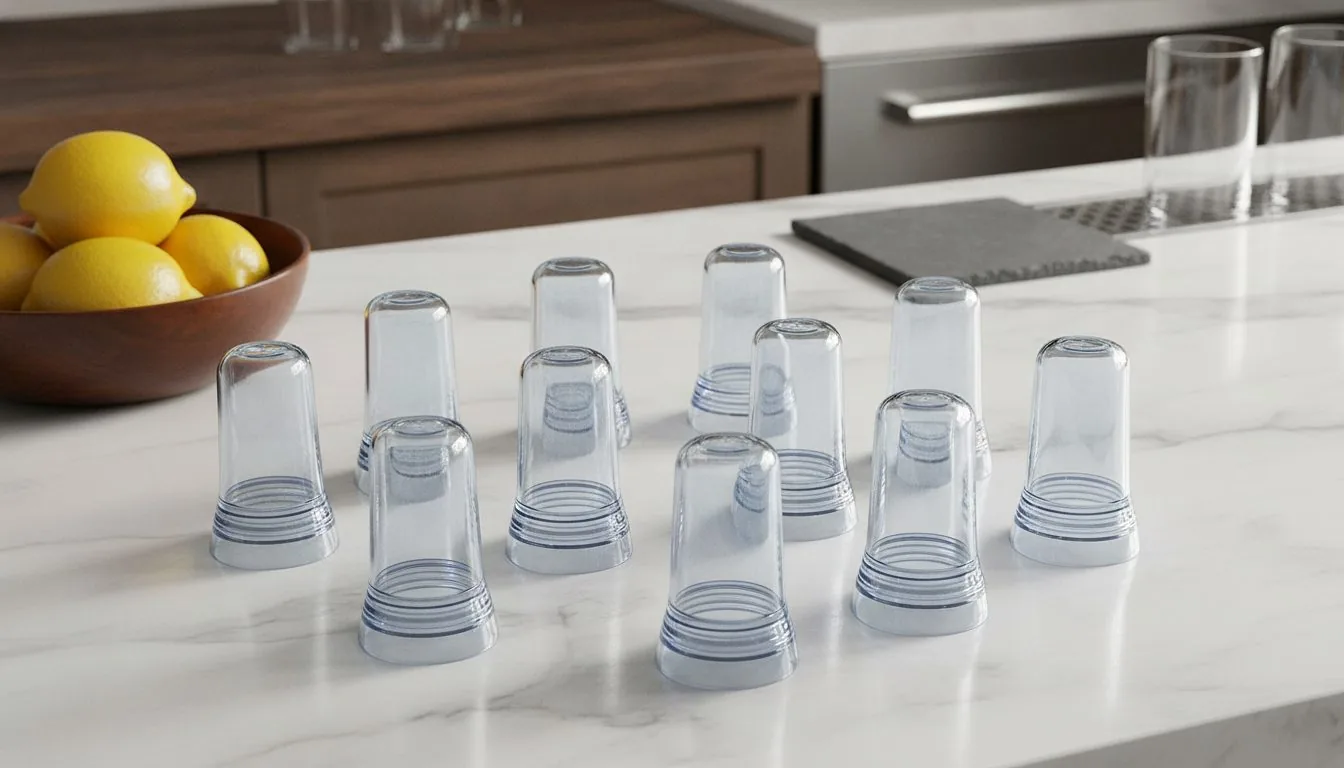
Esatto makes and sells the Universal Dust Cap For Pourers Fits All Pourers, Pack Of 24 Pieces. It is our own product, not an independent pick. Its page describes clear plastic covers for pour spouts. A cap closes the top of a pourer between pours, which makes it a barrier and not a repellent, and it does nothing for flies breeding elsewhere in the bar. More fittings are in the pourers and fittings collection and the screen pourers collection, and our earlier post covers bottle protection.
Frequently asked questions
Is there a natural fruit fly repellent that works?
Not one proven for a bar. A University of Guelph lab study found some plant essential oils deterred spotted wing drosophila from juice-soaked wicks, but it was a different species in a lab. The extension pages cited here rely on sanitation.
What smells repel fruit flies?
The extension sources do not name one. The Guelph study found peppermint oil particularly effective against spotted wing drosophila in the lab. It does not show the same result for bar fruit flies.
Does vinegar repel fruit flies?
No. University of Maryland says vinegar attracts adult fruit flies, which is why vinegar is used as a trap lure. Do not leave open vinegar or juice around a bar.
Do essential oils keep fruit flies away from a bar?
No source cited here shows it. Keep oils away from open bottles, garnish and glassware, and do not treat them as a replacement for removing the food source.
Do fans or airflow keep fruit flies away?
Texas A&M recommends positive air pressure in kitchens and air or strip curtains over exterior kitchen entrances to discourage flies. No source cited here tests a small fan on a bar.
Does a fruit fly repellent spray work?
No source cited here evaluates one. If a product makes a pest claim, its label governs, and in a food business the label must allow that use. Never spray near open bottles or garnish.