Bar Cleaning Checklist: Daily, Weekly and Monthly
Quick Answer: A bar cleaning checklist runs in three tiers. Daily, after closing: wipe surfaces, empty trash and recycling, rinse bottles and cans, wash drain baskets, dry mops and wipe bottle necks. Weekly: deep clean drains, drip trays and under mats. Monthly: clean under equipment and inspect for pests and leaks. The FDA Food Code sets few fixed intervals, so the weekly and monthly tiers are suggested, not required.
This is a bar's version of a restaurant cleaning checklist. It is built around what draws pests, because a dirty bar is where fruit flies start. The sources are the FDA Food Code and university extension guidance for food areas. Pest steps link to our guides on getting rid of fruit flies and where they come from.
How often does a bar have to clean?
As often as it takes to stay clean, and the code mostly leaves the number to you. The FDA Food Code 2026 (checked September 2026) says physical facilities must be cleaned as often as necessary (§6-501.12), with routine cleaning done when the least food is exposed, such as after closing. Non-food-contact surfaces of equipment are cleaned at a frequency that stops soil building up (§4-602.13). Beverage dispensing nozzles and ice bins are cleaned at the manufacturer's frequency, or often enough to stop soil or mold building up (§4-602.11). The Food Code is a model. Your local health department enforces the version it has adopted, so its rules come first.
What goes on a bar cleaning checklist?
Use the table as a starting schedule. Rows marked suggested have no interval in the sources, so they are ours to adjust. Sources checked September 2026.
| When | Task | Basis |
|---|---|---|
| Between uses | Hold counter wiping cloths in sanitizer solution. Launder cloths daily. | Food Code §3-304.14 |
| As it happens | Wipe up spilled food and drinks, including in soda dispenser drip trays. | Oregon State PNW 769 |
| Daily, after closing | Clean counters, sinks and bar surfaces. | Food Code §6-501.12 |
| Daily | Empty trash and recycling. Rinse bottles and cans. Clean bins inside and out. | Oregon State PNW 769; University of Maryland |
| Daily | Wash floor sink catch baskets. Squeeze out mops and hang them to dry. | Oregon State PNW 770; University of Maryland |
| Daily (suggested) | Discard overripe garnish. Wipe bottle necks and pour spouts. | Sugary residue and overripe fruit draw flies (University of Maryland; UC IPM) |
| Weekly (suggested) | Deep clean floor drains with an enzymatic or bacterial cleaner, then hot water. Follow the product label. | Oregon State PNW 770 says "routinely" |
| Weekly (suggested) | Lift mats and clean under them. Wash drip trays. | Oregon State PNW 770 |
| Per maker | Clean beverage nozzles and ice bins at the manufacturer's frequency. | Food Code §4-602.11 |
| Monthly (suggested) | Clean under and behind equipment. Clean refrigerator and ice machine condensate lines and trays. | Oregon State PNW 769 |
| Monthly (suggested) | Inspect for pests, leaks and watermarks, and check screens and door sweeps. | Food Code §6-501.111; Oregon State PNW 770 |
Where do pourers and bottle necks fit on the checklist?
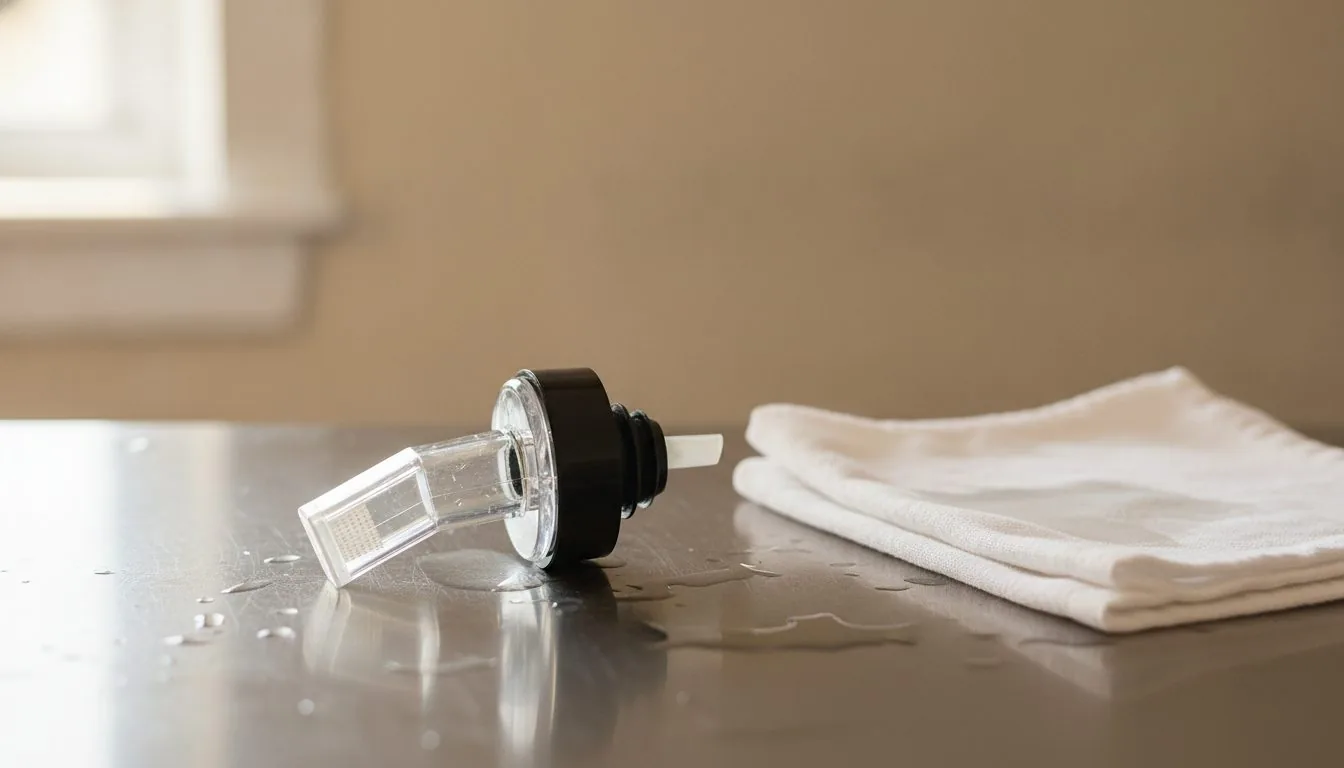
Wipe bottle necks and pour spouts at close, and wash a pourer whenever it is sticky or something has got into it. The Food Code does not name pourers. Its general rule for equipment and utensils that touch food that is not temperature controlled is to clean them at any time contamination may have occurred (§4-602.11). For shelves, barglassmat has a routine for the back bar. A fitted cap or screen keeps things out of a bottle between pours, but it does not remove the need for the rows above.
Where does pest control fit on a bar checklist?
Inside it, not after it. Most of the sanitation rows above are pest control. The Food Code (§6-501.111) requires premises to be kept free of insects and lists routine inspection of shipments and premises, trapping devices, and removing harborage as the methods. If you spray, §7-202.12 requires a label that states the use is allowed in a food establishment. The US EPA's pesticide labels page says always read the label. Do not spray over open bottles, garnish, ice or clean glassware.
What does a checklist not do?
It does not replace your health department's rules, your equipment manuals or staff training. A clean-looking bar can still have a wet drain or a full drip tray, so the checklist works only if someone checks the hidden places on the list.
Where Esatto pourers and dust caps fit on the list
Esatto makes and sells the Pourer With Screen, 12 Pieces and the Universal Dust Cap For Pourers Fits All Pourers, Pack Of 24 Pieces. They are our own products, not independent picks. The screen pourer page describes a built-in screen that keeps bugs and debris out of your liquor, and the dust cap page describes clear plastic covers for pour spouts. More sizes are in the screen pourers and pourers and fittings collections. Neither cleans anything or replaces a row in the table. For the basics, read what a screen pourer is and our earlier post on keeping flies out of bottles.
Frequently asked questions
What is on a restaurant deep cleaning checklist for a bar?
Drains, drip trays, under and behind equipment, condensate lines, mats, and a pest inspection. Deep cleaning is the weekly and monthly tier in the table. The Food Code gives no fixed deep-clean interval, so set yours and follow local rules.
What goes on a weekly restaurant cleaning checklist?
For a bar: deep cleaning floor drains, lifting mats and cleaning under them, washing drip trays, and washing pourers that are due. The weekly interval is a suggestion. Oregon State says to clean drains routinely without naming a number.
What is on a kitchen cleaning checklist that a bar should copy?
Wiping cloth handling, daily surface cleaning after closing, emptying trash and recycling, washing drain baskets, and drying mops. Each comes from the Food Code or the Oregon State kitchen guidance cited above.
How often should a bar be deep cleaned?
The sources set no single interval. The Food Code says cleaning must be often enough to stop soil building up, and nozzles and ice bins follow the manufacturer. Weekly for drains and monthly for equipment is a workable start.
Who decides how often a bar must clean?
Your local health department, using the food code it has adopted. The FDA Food Code is a model that jurisdictions adopt in their own form. Ask them for your exact requirements.
Can a cleaning checklist replace a health inspection?
No. A checklist is an internal schedule. It helps you stay ready for an inspection, but it does not certify anything.