How to Clean Screened Liquor Pourers
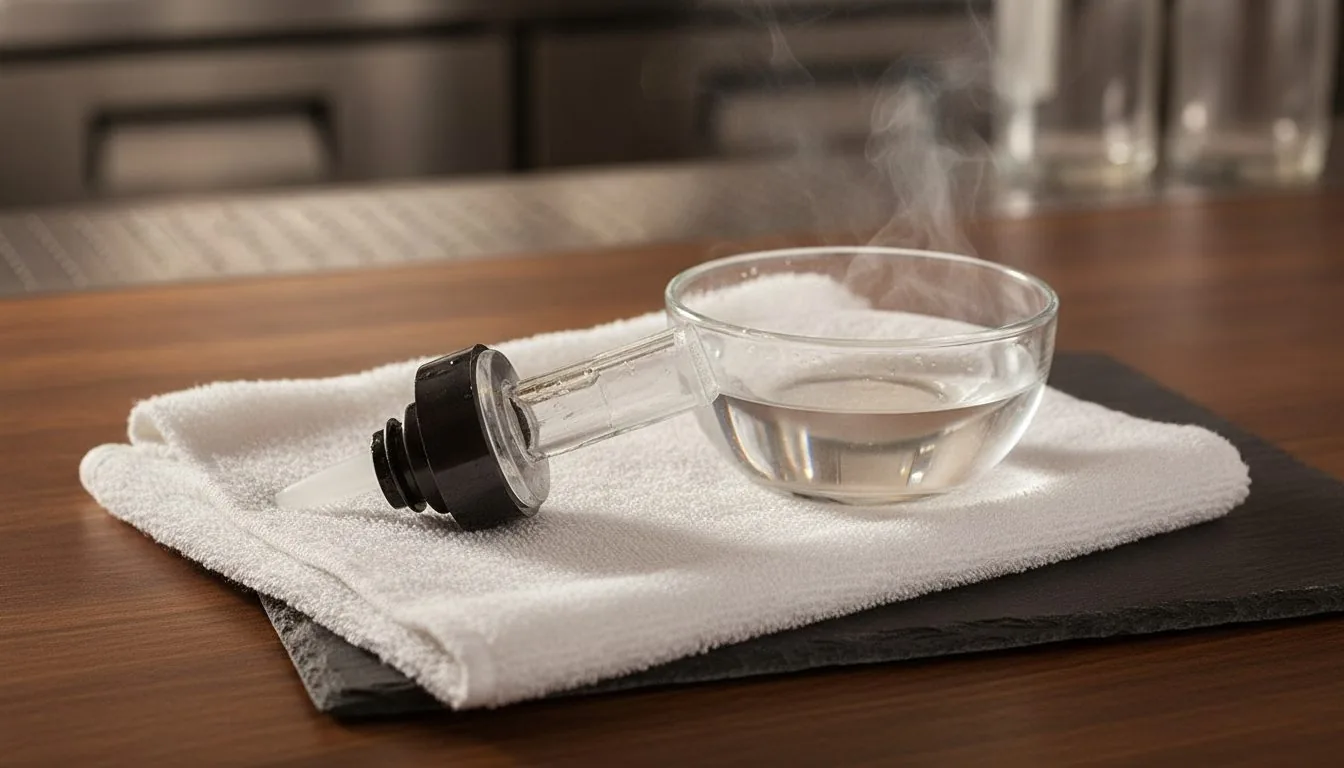
Quick Answer: Take the pourer off the bottle and rinse it, soak it in detergent and water, brush the screen, rinse again and let it dry before it goes back on a wiped, dry bottle neck. Esatto's product page gives no cleaning instructions or temperature limit, so do not assume it takes boiling water or a dishwasher. If your bar sanitizes utensils, use the sanitizer exactly as its EPA label says.
A screened liquor pourer is a free-flow spout with a built-in screen, and anything the screen catches or the liquid leaves behind stays on it until you clean it. Our post on what a screen pourer is covers the design. This one covers the upkeep. Where it sits in a full routine is in the bar cleaning checklist.
How do you clean a screen pourer?
Rinse it, soak it, brush it, dry it. The FDA Food Code 2026 (checked September 2026) lists presoaking, brushes, detergents and hot water among the ways to clean utensils and equipment (§4-603.12 and §4-603.14). It does not name pourers, so this is the general method applied to one, not a manufacturer instruction.
- Pull the pourer off the bottle and rinse it under running water straight away, before sticky residue dries.
- Soak it in detergent and water, at a temperature the pourer can take. The product page gives no limit, so start warm, not hot.
- Brush the screen and the spout, from the pouring side and from the bottle side.
- Rinse until no soap is left, then let it drain and dry completely.
- Wipe the neck of the bottle before you refit it. A sticky neck dirties a clean pourer.
Can you put a screen pourer in the dishwasher?
Do not assume so. Esatto's page for the screen pourer says nothing about dishwashers, and it gives no material or temperature rating. Unless the pack you hold says otherwise, wash it by hand. If you find written guidance from Esatto on the pack, follow that over anything here.
How often should you clean liquor pourers?
None of the sources cited here sets an interval for pourers. The Food Code's general rule for equipment and utensils that touch food which is not temperature controlled is to clean them at any time contamination may have occurred (§4-602.11). It also says non-food-contact surfaces are cleaned at a frequency that stops soil residue building up (§4-602.13). Practical triggers, which are ours:
- A bottle is finished, or the pourer moves to a new bottle.
- The pourer or screen feels or looks sticky.
- The pour has slowed.
- A fly, spill or anything else has got into it.
What clogs a screen pourer?
Sticky liquids such as syrups, liqueurs and juice leave residue that dries on the pourer. A screen has small openings, so residue narrows them and slows the pour sooner than it would on an open spout. That is how a screen works, not a tested finding. The screen also holds back whatever it is meant to keep out. Esatto's page describes it as a protective barrier that keeps bugs and debris out of your liquor, so expect some of that to sit on the screen and check it.
| Sign | Likely cause | What to do |
|---|---|---|
| Slow or uneven pour | Residue on the screen | Soak, brush, rinse, dry |
| Sticky outside | Drips from the bottle neck | Wipe the bottle neck and wash the pourer |
| Debris on the screen | Bugs or particles caught | Wash it, and look for the source |
When is cleaning not enough?
When the pourer is cracked or the screen is damaged, replace it, since a damaged screen no longer acts as a barrier. And when flies keep turning up on a clean pourer, the problem is a source elsewhere in the bar, which our guide to getting rid of fruit flies in a bar walks through.
Where the Esatto Liquor Pourer with Screen, 12 Pack fits
Esatto makes and sells the Esatto Liquor Pourer with Screen, 12 Pack. It is our own product, not an independent pick. Its page describes a built-in screen acting as a protective barrier, and the screen pourers collection lists 12, 24 and 50 packs. It is a free-flow pourer, so it slows and steadies the stream but does not measure a pour. If you need a measured pour, see free-flow versus measured pourers.
Frequently asked questions
How do I clean a clogged screen pourer?
Soak it in detergent and water, brush the screen from both sides, rinse and dry it. If it still pours slowly after that, the screen may be damaged. Replace it.
Can screen pourers go in the dishwasher?
Esatto's product page does not say they can. It gives no material or temperature rating. Hand wash unless your pack states otherwise.
What should I use to clean screened liquor pourers?
Detergent, water and a brush. The Food Code names detergents, hot water and brushes as cleaning methods. Use water that the pourer can take, since no temperature limit is published.
Should I sanitize liquor pourers?
Ask your local health department whether your bar needs to. If it does, the Food Code says a chemical sanitizer must be used as its EPA-registered label says. This post gives no concentrations. The label decides.
How often should I clean liquor pourers?
The sources set no interval. Clean them when a bottle is finished, when they feel sticky, when the pour slows and whenever something has got into them.
Why is my screen pourer pouring slowly?
Residue on the screen is the likely cause. Clean it. If the pour is still slow, check whether the liquid itself is thick.