Fruit Gnats vs Fruit Flies: How to Tell at the Bar
Quick Answer: Fruit flies are light brown to black with red eyes, about 1/8 inch (3 mm) long, and breed in fermenting fruit, drinks and moist organic matter. Drain flies are gray, fuzzy and moth-like, and breed in drain slime. Fungus gnats are slender and dark, and breed in wet soil and mold. Phorid flies are humpbacked and run in zigzags. Each needs a different fix, so identify the fly first.
Bar staff call any tiny flier a gnat. "Fruit gnat" is a common name, and Iowa State University Extension (checked September 2026) calls fruit flies "a kind of gnat". True fungus gnats are a different insect with a different source. Getting the identification right decides where you clean, so do it before you act on the fruit fly removal routine.
Is a fruit gnat the same as a fruit fly?
Usually, when someone at a bar says "fruit gnat" they mean a fruit fly. The name is loose. Oregon State University Extension (checked September 2026) lists fruit flies under the names lesser fruit, pomace, vinegar or bar flies, and treats darkwinged fungus gnats as a separate family. The names overlap in everyday speech, but the insects do not share a breeding site. That is why the fix differs.
How do you tell them apart at the bar?
Size, shape and movement are the fastest checks. Then look at where they gather.
| Fly | Size and look | Where the larvae develop | Source |
|---|---|---|---|
| Fruit fly | 1 to 3 mm. Light brown to black, red eyes, clear wings held flat. | Ripe or fermenting fruit and vegetables, moist organic matter, drain slime | Oregon State PNW 770 and 769 |
| Drain fly | 2 to 4 mm. Grayish-tan to dark brown, fuzzy and moth-like. Weak fliers with short erratic flights. | Slime on the sides of drains | Oregon State PNW 770 |
| Phorid fly | 2 to 3 mm. Yellow, tan or dark brown, humpbacked. Runs on surfaces in zigzags. | Rotting food scraps, mixed garbage, moist organic matter | Oregon State PNW 770 |
| Fungus gnat | About 3 mm. Slender, black, long legs and antennae. Runs on soil of potted plants. | Moist soil and damp areas with fungus or algae | Oregon State PNW 770 |
How do you tell where the flies are coming from?
Test the likely spots. Oregon State says to cover a drain overnight with clear tape, or with a clear container with a sticky card taped inside, and see what emerges. It also says small plug-in UV light traps with sticky boards show where adults are most numerous, but should not go near sinks or dishwashing equipment where water splashes. Flies can emerge from more than one place. Oregon State also says your county Extension office can help identify what you catch.
Does each type need a different fix?
Yes, because each breeds somewhere different. Oregon State's kitchen sheet (PNW 769) says finding and removing the source where larvae develop is the key for both fruit flies and drain flies.
| Fly | First fix | Source |
|---|---|---|
| Fruit fly | Remove fermenting fruit, spills, residue in bottles and damp mops. Sanitation is the primary control. | University of Maryland |
| Drain fly | Clean the drain slime. Oregon State recommends an enzymatic or bacterial cleaner, then hot water, not caustic cleaners. | Oregon State PNW 770 |
| Phorid fly | Look for rotting matter, damp organic buildup and plumbing leaks, then remove them. | Oregon State PNW 770 |
| Fungus gnat | Fix damp spots and clean fungal or algal growth. Oregon State advises against potted plants in food preparation areas. | Oregon State PNW 770 |
Potted herbs on a back bar count. For any spray or drain product, the label must state that use is allowed in a food establishment (FDA Food Code 2026 §7-202.12, checked September 2026). Read where bar fruit flies come from for the source list.
Where the Esatto screen pourers fit
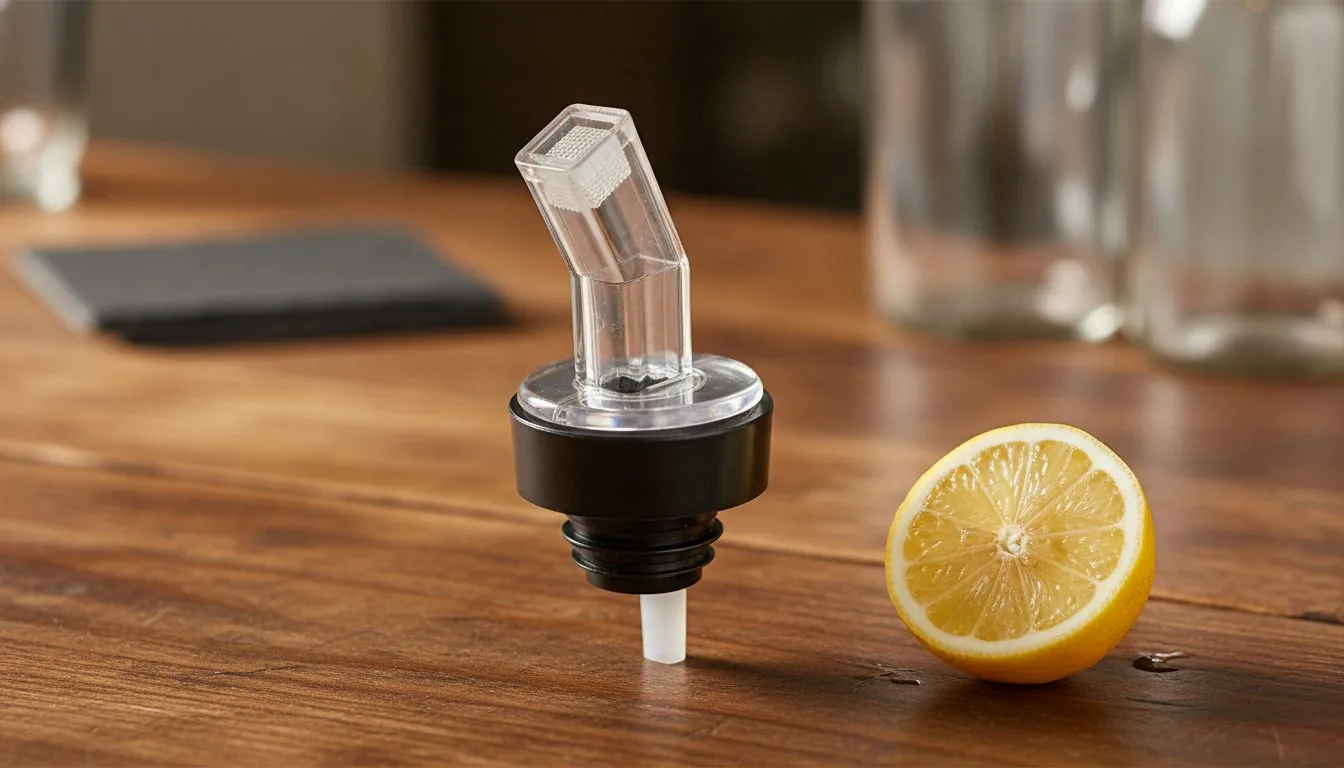
Esatto makes and sells the Pourer With Screen, 12 Pieces, and more packs are in the Screen Pourers collection. They are our own products, not independent picks. The page describes a built-in screen that acts as a protective barrier, keeping bugs and debris out of your liquor. That applies whichever fly gets near an open bottle. It does nothing about a drain or a soil pot where the flies breed, so identify and fix the source first. Our explainer what a screen pourer is has the detail, and the older post on keeping fruit flies out of liquor covers the bottle side.
Frequently asked questions
How do I tell fruit flies from gnats?
Look at size, shape and where they gather. Fruit flies have red eyes and hover around fruit and drinks. Drain flies are fuzzy and moth-like near drains. Fungus gnats are slender and dark and run on wet soil. Oregon State describes each.
Are fruit gnats and fruit flies the same thing?
People use "fruit gnat" loosely for fruit flies. Fungus gnats are a separate insect that breeds in wet soil and mold, not in fruit.
How do I get rid of gnats and fruit flies?
Identify which one you have, then remove its source: fermenting fruit and residue for fruit flies, slime for drain flies, damp soil for fungus gnats. Traps catch adults, and sanitation is the primary control.
Do fungus gnats come from fruit?
No. Oregon State says fungus gnats infest moist, organic places that support fungus and algae, such as potted plant soil. Fruit flies are the ones drawn to ripe and fermenting fruit.
Are drain flies the same as fruit flies?
No. Drain flies are fuzzy and moth-like and their larvae live in drain slime. Fruit flies have red eyes and breed in fruit and fermenting liquid. Some fruit fly species also use drain slime.
Can a bar have more than one kind of fly?
Yes. Oregon State says flies can emerge from more than one location. Check drains, fruit, spills and any plants before deciding you have only one problem.