Vinegar and Dish Soap Fruit Fly Trap for a Bar
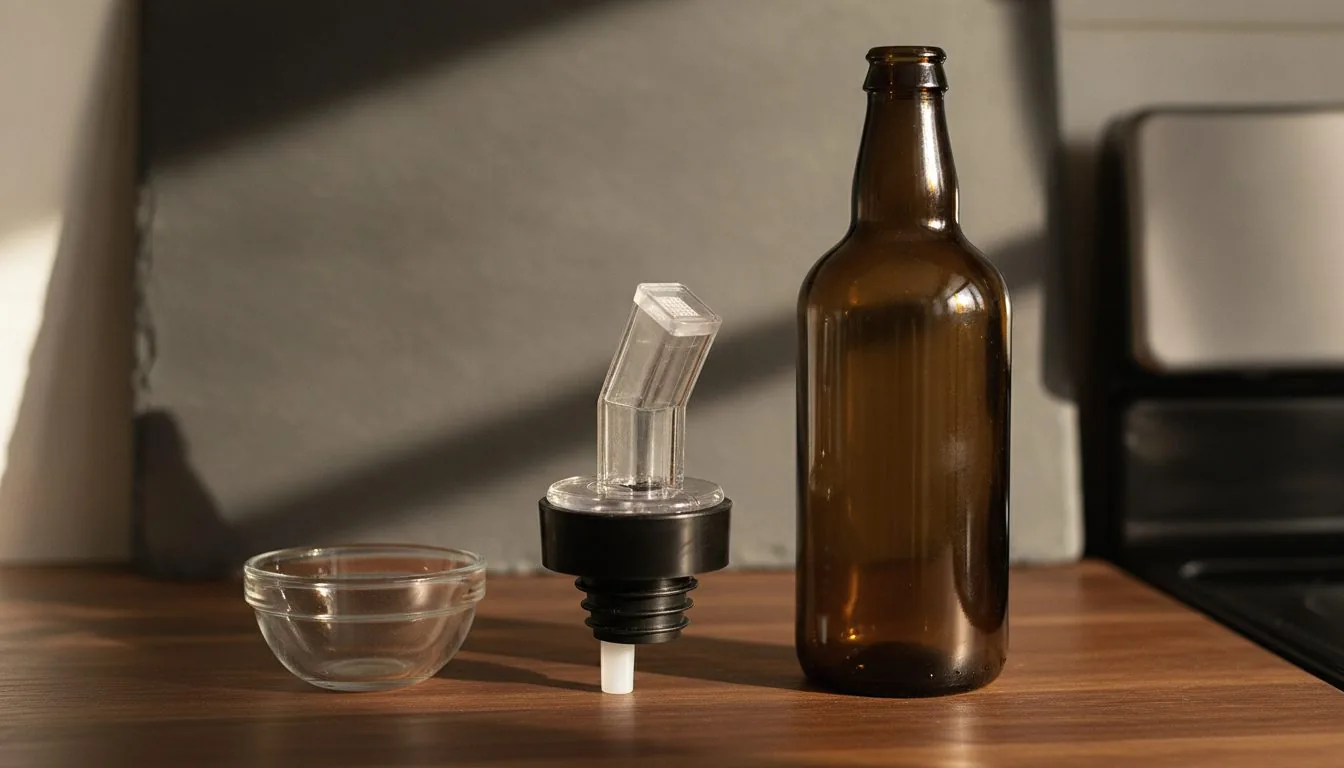
Quick Answer: Pour apple cider vinegar into a small glass or jar, add a drop of dish soap, cover it tightly with plastic wrap and poke small holes so flies can enter. University of Maryland Extension describes this trap. It catches some adult flies and does not fix the source, so keep cleaning. It is a trap, not a sanitizer. Set it away from garnish, ice, clean glassware and open bottles.
A vinegar and dish soap trap is the cheapest way to catch the adults, and a bar can make one in a minute. It works only as one step in a larger routine, described in our guide to getting rid of fruit flies in a bar. Here is the recipe from the extension sources, what they leave out, and where a bar should and should not put one.
How do you make a vinegar and dish soap fruit fly trap?
University of Maryland Extension (checked September 2026) says to pour apple cider vinegar into the bottom of a glass jar, add a drop of dish soap, cover the top with plastic wrap or a small plastic bag, and secure it tightly around the rim with a rubber band. Then poke a tiny hole in the plastic so flies can enter but not leave. Washington State University Extension (checked September 2026), quoting Michigan State University Extension, gives a near-identical recipe with slightly different amounts.
| Step | University of Maryland | Michigan State, via Washington State |
|---|---|---|
| Container | Glass jar | Small juice glasses |
| Vinegar | Apple cider vinegar in the bottom | Apple cider vinegar, about 2/3 full |
| Soap | A drop of dish soap | A drop or two of liquid dishwashing soap, swirled |
| Cover | Plastic wrap or a small bag, held with a rubber band | Plastic wrap stretched tight, held with a rubber band |
| Holes | A tiny hole | A dozen holes, made with a toothpick |
Which vinegar should you use?
Apple cider vinegar. It is the vinegar named by University of Maryland, Washington State and Iowa State University Extension (checked September 2026). University of Maryland also says adult fruit flies are attracted to wine, beer, fruit juice and vinegar. None of the pages checked here say whether white vinegar works, so this post cannot tell you that it does or that it does not.
Why add dish soap, and how much?
Only a drop or two. All three pages put a drop or two of dish soap or detergent in the vinegar without saying why. Nebraska Extension (checked October 2026) says the soap acts as a surfactant that reduces the surface tension of the vinegar so flies sink when they land. Do not add other cleaners, and do not treat the mix as a cleaning product. A vinegar and soap trap is bait, not a sanitizer or a disinfectant. If your bar uses a chemical sanitizer on utensils, the FDA Food Code 2026 (§4-501.114, checked September 2026) says the sanitizer must be used as its EPA-registered label says.
How often should you change it?
No source gives an interval for the vinegar trap. Michigan State's separate cone trap is emptied and re-baited every day. The Food Code (§6-501.112) says trapped insects must be removed often enough to prevent accumulation, decomposition or attracting pests. So check it daily and empty it before dead flies pile up. Iowa State says to expect a couple of weeks of diligence, so plan to keep a trap up that long while you clean the source.
Where should a bar put it, and where not?
Near the source you found, and away from anything served or poured. Michigan State (via Washington State) says to set traps wherever fruit flies seem to be congregating. In a bar that means beside a drain, the recycling or a dispenser tray, and not next to garnish, the ice well, clean glassware or an open bottle. This is our advice, not a rule from those pages. A trap is also a food-area pest matter, so ask your local health department whether it accepts a homemade trap behind the bar. Read where bar fruit flies come from to find the spot.
When is a homemade trap the wrong choice?
When you have not fixed the source, since University of Maryland calls sanitation the primary control. And when you are tempted to bait it with fruit. Oregon State University Extension discourages homemade funnel or cellophane traps with fruit inside, saying they trap only some flies and can end up producing more. Iowa State also lists wine or a small piece of fruit as lures, so stick to vinegar, which every recipe here uses. Ready-made options are in trap types for bars.
Where Esatto pourers and dust caps fit
Esatto does not sell fruit fly traps. Neither the screen pourers collection nor the pourers and fittings collection includes one. Esatto does make and sell the Pourer With Screen, 12 Pieces, our own product, not an independent pick. Its page describes a built-in screen that keeps bugs and debris out of your liquor. It does not catch flies. It sits at the bottle, and the trap does the catching, alongside cleaning. Our older post covers bottle protection.
Frequently asked questions
How do you make a simple fruit fly trap?
Put apple cider vinegar in a small glass, add a drop of dish soap, cover it tightly with plastic wrap held by a rubber band, and poke small holes in the plastic. This is the recipe University of Maryland Extension describes.
Does a vinegar fruit fly trap work?
It catches some adults. Oregon State says lure traps trap only some flies, and Washington State says killing adults has little effect on the future population. It helps only alongside removing the source.
Can I use white vinegar in a fruit fly trap?
The extension pages checked here name apple cider vinegar, and none address white vinegar. Use cider vinegar, since that is what the sources support.
Why use apple cider vinegar in a fruit fly trap?
University of Maryland says adult fruit flies are attracted to vinegar, along with wine, beer and fruit juice. The three extension sources cited all name cider vinegar in their trap recipes.
What is the best DIY fruit fly trap?
Three extension pages describe the vinegar and dish soap trap. Michigan State also describes a paper cone trap baited with juice, wine or overripe fruit, but Oregon State discourages homemade funnel traps with fruit inside. Where sources disagree, the vinegar trap is the safer pick.
How long does a vinegar trap take to work?
The pages give no timing. Iowa State says a couple of weeks of diligence is needed, using traps together with sanitation. Keep cleaning while the trap runs.
Is a vinegar trap safe to use near food?
Keep it away from food, drinks and clean glassware, since it holds vinegar, soap and dead flies. Ask your local health department whether a homemade trap is accepted in your bar.