Why Fruit Flies Peak in Summer: Patio Bar Tips
Quick Answer: University sources say fruit fly numbers peak in late summer and fall because ripening and decaying fruit is plentiful, and warmth speeds development: Oregon State University Extension says eggs can become adults in a week at 80°F (27°C). A patio bar cannot be screened, so the fixes are sanitation and covering. Cover garnish, empty trash daily, rinse recycling, keep bins away from the bar, and watch the clock on cut fruit in heat.
Fruit flies in summer are a feature of the season, not a sign that one bar is worse than the next. They are also harder to block at a patio or outdoor bar, where there is no door to close. This post covers why numbers rise, how fast they build in heat, and what to change for a patio bar or a home bar. The year-round routine is in getting rid of fruit flies in a bar.
Why do fruit flies peak in summer?
Food and warmth. Washington State University Extension (checked September 2026) says that in late summer and throughout the fall, fruit fly numbers peak sharply because decaying fruit and other organic material are plentiful. University of Maryland Extension (checked September 2026) says late summer and fall are when indoor populations are greatest. Oregon State University Extension (checked September 2026) says outdoors, adults are most active on warm, sunny days, and populations peak in summer months with plentiful rain or irrigation. The sources differ slightly on whether the peak is summer or late summer into fall, so plan for both.
How fast do fruit flies breed in hot weather?
Fast, and heat speeds it up.
| Finding | Source |
|---|---|
| Eggs can hatch and develop into adults in a week at 80°F (27°C) | Oregon State PNW 770 |
| Life cycle of 8 to 10 days | University of Maryland |
| Less than a week from egg to adult | Texas A&M AgriLife |
| Strong fliers, able to travel 9 miles in a single trip | Oregon State PNW 770 |
| In summer, larvae hitchhike on garden fruit and vegetables, often as eggs or larvae that cannot be easily seen | Nebraska Extension |
Sources for the Texas A&M and Nebraska rows: the Texas A&M small flies plan (checked October 2026) and the Nebraska fall fruit flies article (checked October 2026). The range in life cycle figures reflects the sources, not a difference in flies. Because flies can travel that far, distance will not keep them off an outdoor bar.
What should a patio bar change in summer?
Cover food, control waste, and watch the clock on cut fruit. Each item below comes from a source except where marked.
- Cover prepared food and garnish as quickly as possible, and store edibles in airtight containers or refrigerated (University of Arizona and Oregon State kitchen sheet, checked October 2026).
- Do not leave cut fruit out. Penn State Extension (checked October 2026) says to refrigerate cut produce within two hours and discard it after that, and FDA (checked October 2026) says one hour when the air is above 90°F (32°C).
- Use bins with self-closing lids, keep them away from the bar, and keep dumpsters at least 50 feet from kitchen entries (Texas A&M and Arizona). Empty trash and recycling daily (Oregon State PNW 769).
- Rinse bottles and cans, and take recycling outside every few days (Nebraska).
- Clean up spills immediately, including in drip trays (Arizona and Oregon State).
- Check fresh flowers and their water. Washington State says fruit flies are attracted to flowers in vases of water.
- Clear finished drinks. University of Maryland says wine, beer, juice and vinegar attract adults. Clearing them promptly is our advice.
Can you screen an outdoor bar?
Not in any useful way. Oregon State and Arizona say 18 by 18 mesh window screens exclude most smaller flies, but that applies to a building with windows and doors. An open-air bar has no door to close, so the plan shifts from keeping flies out to giving them nothing to eat. A vinegar trap set near the source can catch some adults, as described in our post on the vinegar and dish soap trap, and the other options are in fruit fly traps for bars. Keep traps away from open bottles, garnish and glassware.
Does a home bar need different steps?
The same ones, with less volume. The sources are mostly written for home kitchens, and a home bar fails in the same places: recycling, garden produce, drips and unrinsed bottles. Where flies persist, read where bar fruit flies come from.
Where the Esatto Liquor Pourer with Screen, 12 Pack fits
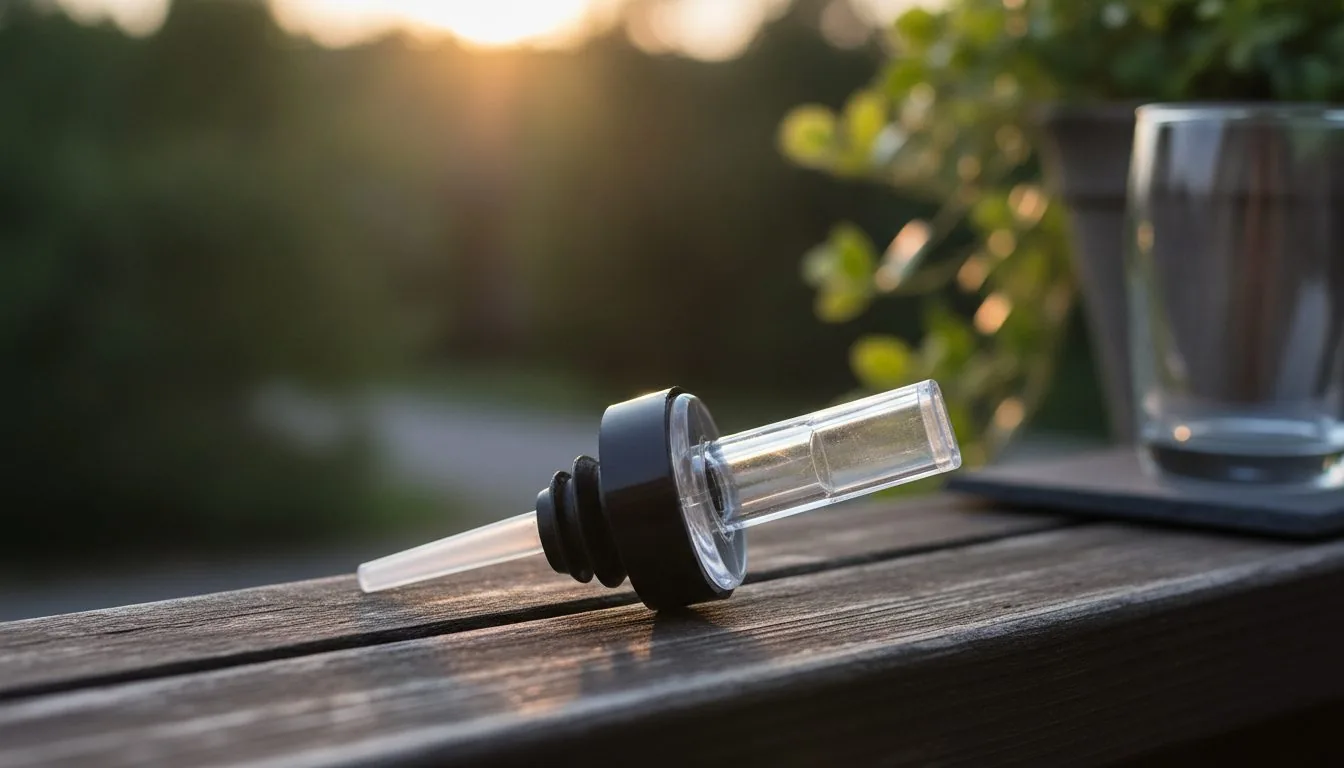
Esatto makes and sells the Esatto Liquor Pourer with Screen, 12 Pack. It is our own product, not an independent pick. Its page describes it as an outdoor pour spout for gatherings, with a built-in screen that acts as a protective barrier, keeping bugs and debris out of your liquor. That covers the bottle opening on a patio. It does not clean the bar, protect garnish or glassware, or control fruit flies on its own. More packs are in the screen pourers collection, and our earlier post covers bottle protection.
Frequently asked questions
Why are there so many fruit flies in summer?
Ripening and decaying fruit is plentiful, and warmth speeds development. Washington State says numbers peak in late summer and fall, and Oregon State says eggs can become adults in a week at 80°F (27°C).
Are summer fruit flies worse than at other times of year?
Usually, yes. University of Maryland says late summer and fall are when indoor populations are greatest. They can still appear in winter, as Washington State notes.
Do fruit flies go away in winter?
Not entirely. Washington State says a glass with a splash of red wine left out in winter is enough to draw a few, and Nebraska says they can arrive on grocery-store produce in winter.
How do I keep fruit flies away from a patio bar?
Cover garnish and food, empty trash and recycling daily, keep bins away from the bar, rinse bottles and cans, clean spills, and discard cut fruit after the time limit. Sanitation is the primary control.
Do fruit flies come from outside?
They can. Nebraska says adults can get through screens and gaps, and Oregon State says they are strong fliers. They also arrive on produce. Removing food sources matters more than blocking them.
How long can garnish sit out on a hot patio?
One hour if the air is above 90°F (32°C), and two hours otherwise, according to FDA and Penn State Extension. Cut small batches and keep the rest covered and cold.