How Long Do Fruit Flies Live? Why a Bar Checks Weekly
Quick Answer: UF/IFAS Extension Polk County says an adult fruit fly lives 40 to 50 days, and the cycle from egg to adult can finish in about a week in favorable conditions. University of Maryland Extension says 8 to 10 days. A spot left alone for a week can put a new generation on the bar, which is why checking breeding spots weekly makes sense. The weekly check is this post's own suggestion.
A fruit fly does not need long to start the next generation, and that timing decides how often a bar should look for the source. This post gives the lifespan and life cycle figures the extension sources publish, where they differ, and what that means for a routine. To learn what to look for at each stage, see fruit fly eggs and larvae. For the removal routine itself, see getting rid of fruit flies in a bar.
How long do fruit flies live?
An adult lives between 40 and 50 days, according to UF/IFAS Extension Polk County (checked October 2026). That page also says an adult female can lay up to 500 eggs in her lifetime. It is the only adult lifespan figure among the sources read for this post, and it is a county extension blog post, not a fact sheet. The other pages give cycle times, not adult lifespans, so treat 40 to 50 days as one source's figure.
Washington State University Extension (checked October 2026) says the same 500-egg figure for a single female laying inside rotting produce. It notes that the flies breed prolifically during their short life span.
How long is the fruit fly life cycle?
About a week to 10 days, depending on the source and the conditions. The stages are egg, larva, pupa and adult, and the sources give these timings.
| Source | Egg to adult | What else it says |
|---|---|---|
| UF/IFAS Extension Polk County | About one week in favorable conditions | Eggs laid about 24 hours after mating; larva about 4 days, pupa about 4 days |
| University of Maryland Extension | 8 to 10 days | Larvae feed 5 to 6 days, then crawl to drier areas to pupate |
| Oregon State University Extension | Just a week at 80°F | Eggs can hatch and develop into adults in that time |
| Washington State University Extension | A few days after the larvae emerge | Larvae emerge within 30 hours, in rotting produce on a compost pile |
The figures differ because the sources describe different conditions and species, and the Washington State example is outdoors. The safe reading is a range: around a week in warm, moist conditions, and up to 10 days. Sources: University of Maryland Extension, Oregon State University Extension and Washington State University Extension, all checked October 2026.
Why does a bar check for fruit flies every week?
Because a generation takes about a week, a source left alone for a week can produce a new set of adults even after you clear the ones you see. University of Maryland Extension says the primary control for fruit flies is sanitation, and Washington State says killing adults has little impact on the future population. If the breeding spot stays, the flies keep coming.
The weekly interval is this post's suggestion, built on those timings. None of the sources prescribes a weekly check for a bar, and the right interval for yours is a decision for you and your local health department. Late summer and fall are when indoor numbers are greatest, according to University of Maryland Extension, though Washington State says they can be a problem any time of the year.
What should a weekly check cover?
The places where something wet and sugary sits still. Oregon State names biofilms in floor and sink drains, overflow drains and disposals, and under antiskid floor mats. University of Maryland Extension adds damp mops and towels, and says to rinse and drain bottles and cans before recycling. For where each of these fits, see where bar fruit flies come from. For the busy season, the patio bar post covers the summer spike.
When is a screen pourer the wrong choice?
When you expect it to change the life cycle. A screen pourer does not shorten or end any life stage, and it does not clear a breeding spot. It is also unnecessary for a bar with only a few bottles that stay capped between pours.
Where the Esatto Liquor Pourer with Screen, 50 Pack fits
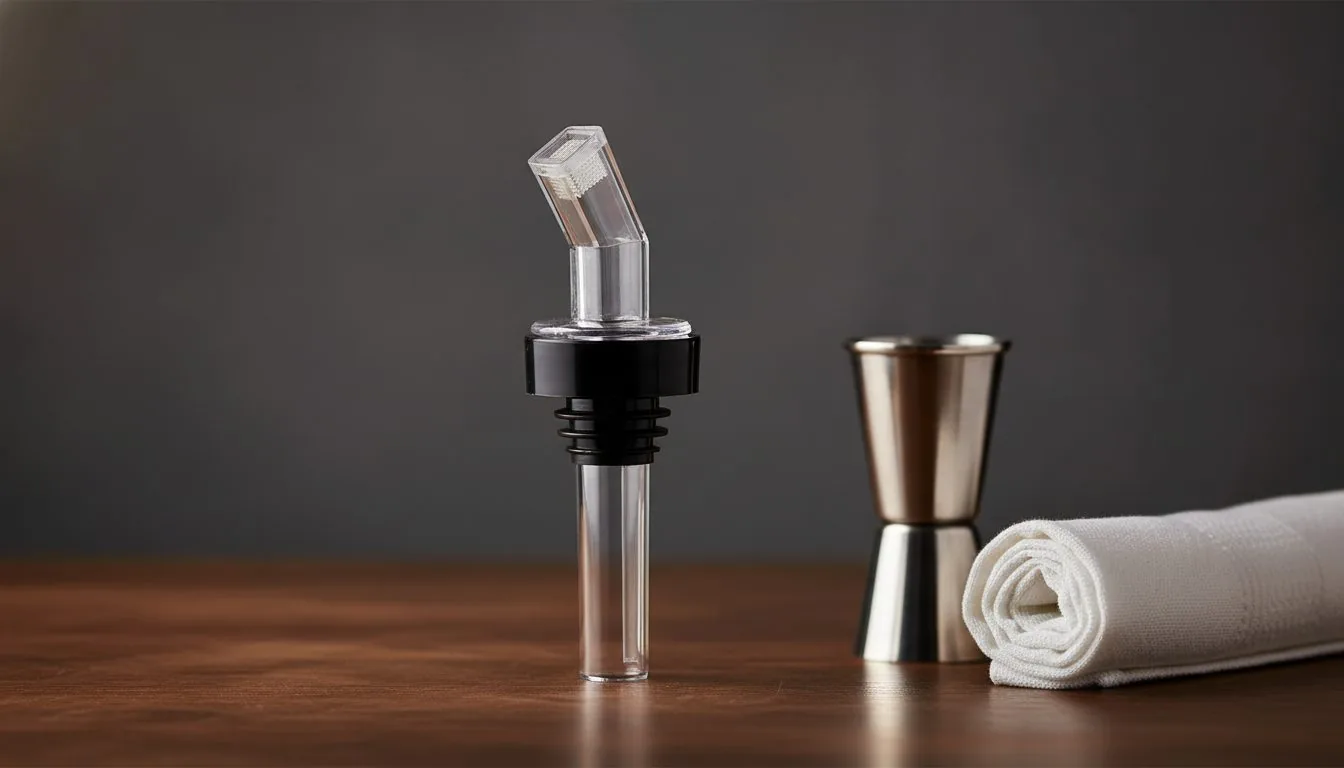
Esatto makes and sells the Esatto Liquor Pourer with Screen, 50 Pack. It is our own product, not an independent pick. Its page describes a free-flow pourer with a built-in screen that keeps bugs and debris out of your liquor. The 50 Pack is the largest pack size on this site. It is not a fruit fly control, and sanitation comes first. The screen pourers page lists the other pack sizes.
Frequently asked questions
How long do fruit flies live?
UF/IFAS Extension Polk County says an adult lives 40 to 50 days. It is the only adult lifespan figure among the sources read for this post.
What is the life cycle of a fruit fly?
Egg, larva, pupa and adult. UF/IFAS Extension Polk County says it can finish in about a week in favorable conditions, and University of Maryland Extension says 8 to 10 days.
How long do fruit flies take to hatch?
Washington State University Extension says larvae emerge within 30 hours in rotting produce. UF/IFAS Extension Polk County says eggs hatch in the fruit they are laid on.
How many eggs does a fruit fly lay?
UF/IFAS Extension Polk County and Washington State University Extension both say a female can lay up to 500 eggs.
What are the fruit fly life cycle stages?
Four: egg, larva, pupa and adult. UF/IFAS Extension Polk County describes these stages. The larva and pupa each last about 4 days, according to UF/IFAS.
Does killing the adult flies end an infestation?
Not by itself. Washington State University Extension says killing adults has little impact on the potential future population, because the adults have likely already laid eggs. Removing the food source matters more.