Wash, Rinse, Sanitize: The 3-Compartment Sink at a Bar
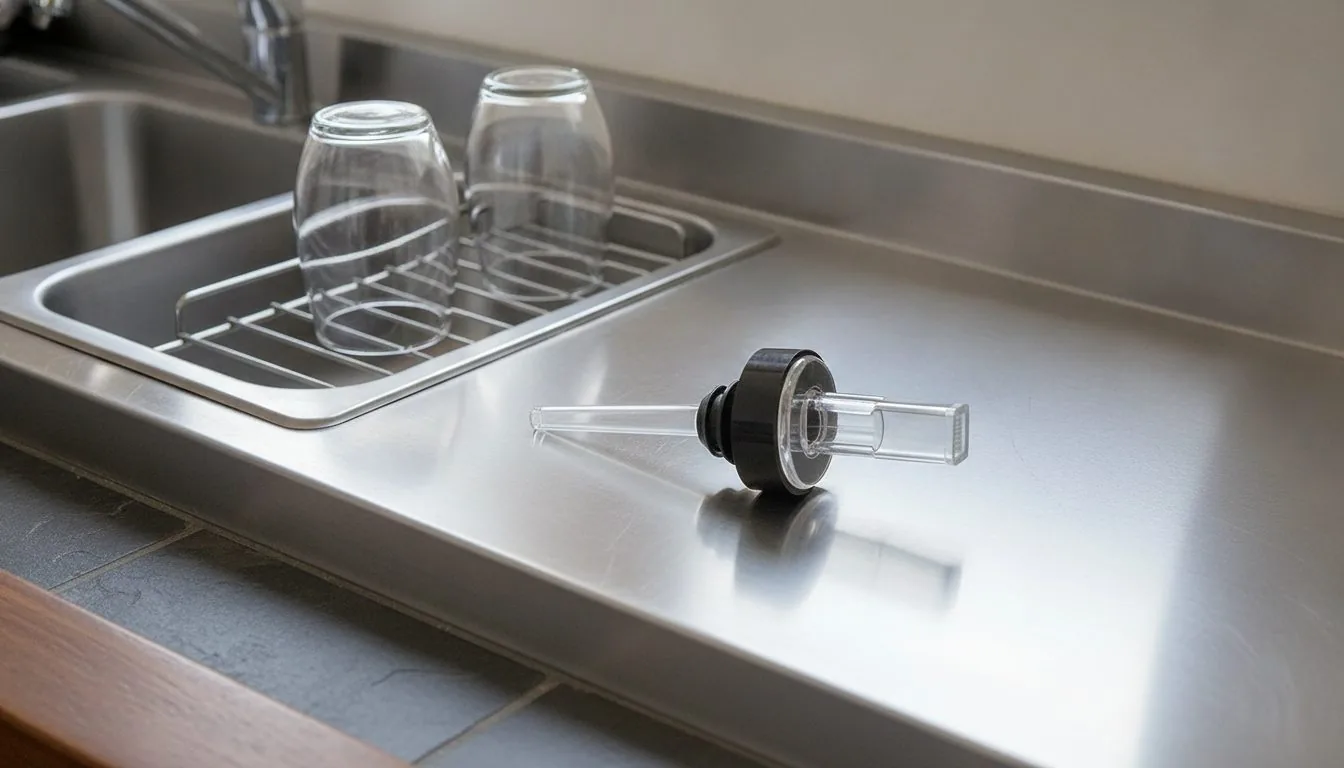
Quick Answer: Sanitizing is a separate step that comes after cleaning. The FDA Food Code 2026 defines it as applying heat or chemicals to cleaned food-contact surfaces to cut disease microorganisms by 99.999 percent. In a three-compartment sink the order is wash, rinse, sanitize, then air-dry. A test kit checks the sanitizer, and its label sets the strength. Do not dry with a cloth.
A three-compartment sink is how most bars wash, rinse and sanitize their tools and glasses by hand. The rules below come from the FDA Food Code 2026 (checked October 2026). It is a model code: the version your local health department has adopted is the one that binds your bar. For the wider routine, see our bar cleaning checklist and bar cleaning schedule.
What is sanitizing in a bar?
It is the step that follows cleaning, not a replacement for it. The Food Code defines sanitization as applying cumulative heat or chemicals on cleaned food-contact surfaces so that, when evaluated for efficacy, it yields a reduction of 5 logs, which equals a 99.999 percent reduction of representative disease microorganisms of public health importance. Under the code, a utensil is a food-contact implement used to store, prepare, dispense or serve food, and tableware includes drinking vessels such as cups and tumblers. So bar tools and glasses fall under these rules. A dirty surface is not sanitized by a sanitizer, because the definition starts with "cleaned".
What are the steps in a three-compartment sink?
Five, in this order. Section 4-301.12 requires a sink with at least three compartments for manually washing, rinsing and sanitizing, large enough to immerse the largest item.
| Step | What the Food Code asks | Section |
|---|---|---|
| 1. Scrape | Remove debris before washing; pre-flush or presoak if needed | 4-603.12 |
| 2. Wash | Wash solution at 110°F (43°C) or above, or the temperature on the cleaning agent's label | 4-501.19 |
| 3. Rinse | A distinct, separate water rinse after washing and before sanitizing | 4-603.16 |
| 4. Sanitize | Hot water immersion for at least 30 seconds at 171°F (77°C) or above, or a chemical sanitizer used to its EPA-registered label | 4-703.11, 4-501.111, 4-501.114 |
| 5. Air-dry | Air-dry or drain after sanitizing; do not cloth-dry | 4-901.11 |
Wash, rinse and sanitize solutions must be kept clean (4-501.18). This page gives no chemical strengths or ratios. The sanitizer's label sets them.
Why does a bar need a sanitizer test kit?
Because you cannot see whether a sanitizing solution is the right strength. Section 4-302.14 requires a test kit or other device that accurately measures the concentration of the sanitizing solution, and 4-501.116 says the concentration must be determined with that kit, used to the kit maker's label. Section 4-303.11 adds that chemical sanitizers must be available during all hours of operation. Our suggestion, not a Food Code line: test the solution when you set it up and again during the shift.
Can you dry glasses and tools with a cloth?
Not after sanitizing. Section 4-901.11 says equipment and utensils must be air-dried or used after adequate draining, and may not be cloth-dried. The one exception: utensils that have already air-dried may be polished with a cloth that is kept clean and dry. Clean items are then stored in a self-draining position that allows air-drying, covered or inverted (4-903.11).
How often are the sinks cleaned, and where are sanitizers stored?
The sink compartments are cleaned before use, throughout the day as often as needed to prevent recontamination, and at least every 24 hours if used (4-501.14). Toxic materials, which include cleaners and sanitizers, must be stored so they cannot contaminate food, equipment or utensils, and not above them (7-201.11). Cleaners and sanitizers may be kept in the warewashing area for convenience if they are stored to prevent contamination.
Where does a screen pourer fit in this routine?
Pour spouts touch the liquor and the bartender's hand, so a bar may add them to the cleaning routine. Our guide to cleaning screened liquor pourers covers that. Esatto makes and sells the Esatto Liquor Pourer with Screen, 12 Pack. It is our own product, not an independent pick. Its collection page describes a free-flow pourer with a built-in screen that keeps bugs and debris out of your liquor. The product page gives no cleaning, temperature or sanitizing rating, so this post does not say a screen pourer goes through the sink. If you need a pourer with a stated rating for hot-water sanitizing, this page cannot tell you that one exists. See the screen pourers collection for the pack sizes.
Frequently asked questions
What is sanitizing?
Under the Food Code it is applying heat or chemicals to cleaned food-contact surfaces so disease microorganisms drop by 99.999 percent. It only counts after cleaning.
After sanitizing dishes in a three-compartment sink, what should you do?
Let them air-dry or drain. The Food Code says equipment and utensils may not be cloth-dried. Already air-dried utensils may be polished with a clean, dry cloth.
Where should sanitizing chemicals be stored?
Away from and not above food, equipment and utensils. The Food Code lets cleaners and sanitizers sit in the warewashing area if stored to prevent contamination.
What is a sanitizing sink?
It is the third compartment of a three-compartment sink, where cleaned and rinsed items are immersed in hot water or a chemical sanitizer, or any sink set up for that step.
How is cleaning different from sanitizing?
Cleaning removes soil. Sanitizing reduces microorganisms on a surface that is already clean. The Food Code lists them as separate steps, with a rinse between.
Is the definition of sanitizing the same on a food-handler course quiz?
Course materials word it their own way, so use the answer your course expects. The Food Code definition quoted above is the one cited on this page.