Bar Cleaning Schedule: What to Clean Each Day of the Week
Quick Answer: Run the same closing block every night: wipe surfaces, empty and rinse bins and recycling, wash drain catch baskets, hang mops to dry and launder wiping cloths. Then give each weekday one heavier job: drains, drip trays and mats, pourers, floors and equipment, outdoor bins, ice and dispensing. The days are our suggestion. The FDA Food Code sets few fixed intervals, so your health department's rules come first.
Our bar cleaning checklist says what to clean. This schedule says when, so nothing piles up. It puts one heavier job on each day and keeps a short routine for every night. The rota is our own suggestion. The sources below name tasks and set few intervals. Sources checked October 2026.
What should you clean every night?
The same closing block, after the last service. The FDA Food Code 2026 says physical facilities are cleaned as often as necessary and, apart from spills, when the least food is exposed, such as after closing (§6-501.12). Most of this block comes from Oregon State Extension's guidance on flies in kitchens (PNW 769). The pourer wipe is ours.
- Wipe the bar top, sinks and other surfaces.
- Empty trash and recycling. Rinse cans and bottles first. Clean bins inside and out.
- Wash drain catch baskets. Oregon State says to wash them daily.
- Squeeze out mops and store them where they dry quickly.
- Launder wiping cloths. Cloths for counters are held in sanitizer between uses and laundered daily (Food Code §3-304.14).
- Throw out overripe garnish. Wipe bottle necks and pour spouts.
What should you clean on each day of the week?
One heavier job a day, on top of the closing block. Shift the days to fit your closed day and your busiest nights. This is our rota, not a rule.
| Day | Heavier job | Basis |
|---|---|---|
| Monday | Floor and sink drains | Oregon State PNW 770: routinely deep clean floor drains with a bacterial or enzymatic cleaner, then hot water |
| Tuesday | Drip trays, then lift mats and clean under them | PNW 769 (soda dispenser drip trays); PNW 770 (areas under antiskid mats) |
| Wednesday | Pourers and bottle necks | Ours |
| Thursday | Under and behind equipment; floors wall to wall | PNW 769 |
| Friday | Outside bins and the dumpster area, before the weekend | Food Code §5-501.113 and §5-501.115 |
| Saturday | Walk the bar for damp spots, leaks, fruit left out and signs of pests | Food Code §6-501.111 |
| Sunday | Ice bin, beverage nozzles and condensate trays | Food Code §4-602.11; PNW 769 |
For drains, follow the product label. Oregon State advises avoiding caustic drain cleaners such as lye-based products (PNW 770). In its phorid fly advice it also says bleach and other disinfectants are not effective on biofilm and that bleach with hot water releases chlorine gas.
What does the Food Code say about how often?
Mostly "as often as needed". The code sets few numbers, and the version your local health department adopted is the one that binds your bar.
| Item | What the Food Code says | Section |
|---|---|---|
| Physical facilities | As often as necessary, when the least food is exposed | §6-501.12 |
| Non-food-contact equipment surfaces | At a frequency that stops soil building up | §4-602.13 |
| Ice bins and beverage nozzles | At the manufacturer's frequency, or often enough to stop soil or mold | §4-602.11 |
| Counter wiping cloths | Held in sanitizer between uses; laundered daily | §3-304.14 |
Where do pourers fit on the schedule?
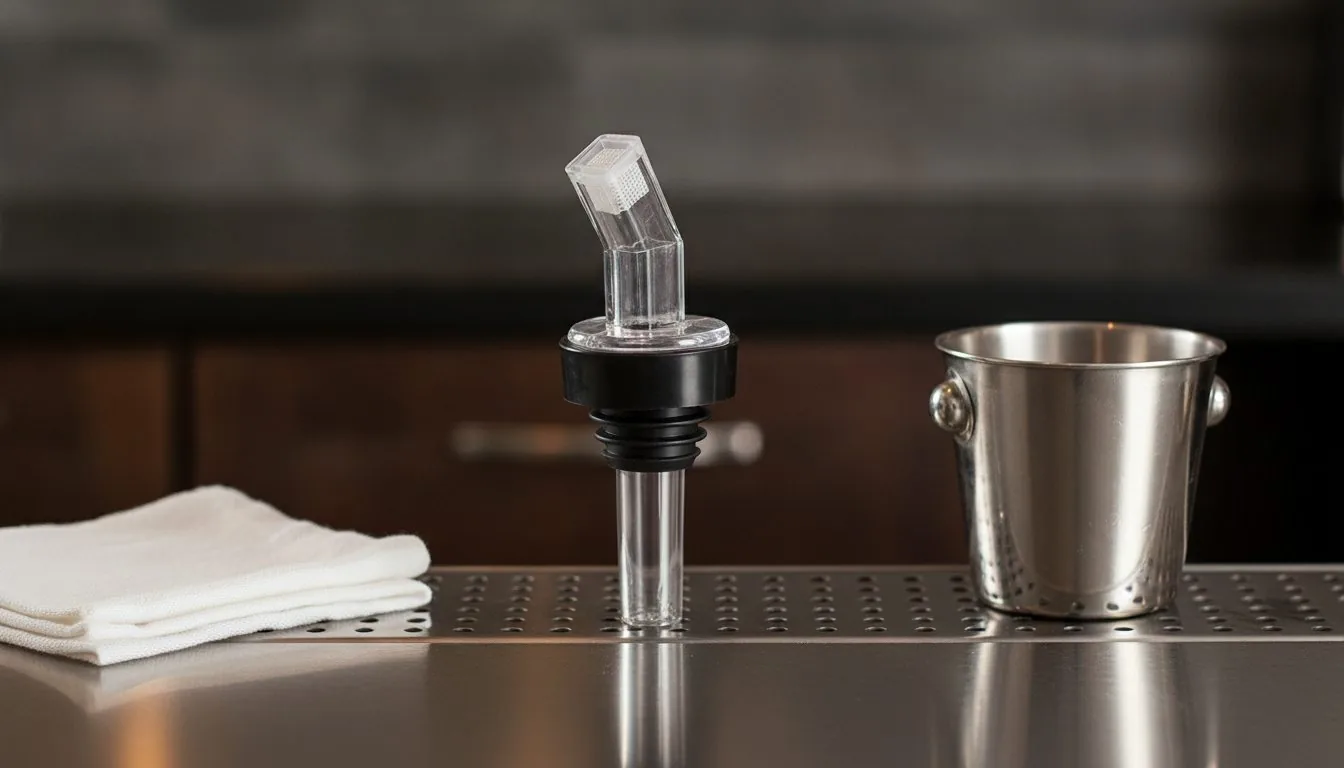
Wipe the neck and spout every night, and wash the pourer on Wednesday or whenever it is sticky or something has got into it. The Food Code names no interval for pourers. Our guide to cleaning screened liquor pourers gives the method.
When is a schedule not enough?
When flies keep coming back. A rota does not find a hidden leak or a clogged drain. Look for the breeding spot: where bar fruit flies come from, fruit flies in bar drains, and house flies in a bar if they arrive from outside. If you spray, the pesticide label must state that use is allowed in a food establishment (Food Code §7-202.12).
Where the Esatto Liquor Pourer with Screen, 12 Pack fits
Esatto makes and sells the Esatto Liquor Pourer with Screen, 12 Pack. It is our own product, not an independent pick. Its page describes a free-flow pourer with a built-in screen that keeps bugs and debris out of your liquor, and gives no cleaning instructions or temperature limit, so hand wash it. A screen does not remove a pourer from the Wednesday job. More are in the pourers and fittings collection.
Frequently asked questions
What should be on a weekly cleaning schedule for a bar?
One heavier job a day on top of the nightly closing block: drains, drip trays and mats, pourers, equipment and floors, outdoor bins, and ice and dispensing. Move the days around to suit your week.
What is a daily and weekly cleaning schedule?
The daily part is the closing block every night. The weekly part is the heavier job for each day of the week. Together they cover the bar once a week without a single long clean.
What goes on a daily cleaning schedule for a bar?
Wipe surfaces, empty and rinse bins and recycling, wash drain catch baskets, dry mops, launder wiping cloths, throw out overripe garnish and wipe bottle necks. Do it after closing, when the least food is out.
How do I make a weekly cleaning checklist?
List every recurring job, mark which need doing nightly, then spread the rest across the week so no day carries more than one big task. Check the list against your equipment manuals and local rules.
Does the health department require a cleaning schedule?
The Food Code says what must be kept clean and sets few intervals. Whether you need a written schedule depends on your local health department's adopted code. Ask them what applies to your bar.
How often should a bar deep clean?
The sources set no single interval. The Food Code says cleaning must be often enough to stop soil building up, and ice bins and nozzles follow the maker. Weekly for drains, as in the rota above, is a workable start.